 David Young
Case study · Internal teams
Stride: data mapping tools and a governance knowledge base
I map how data moves between Stride's systems, build tools that let data teams search and trace those mappings, and built a knowledge base that gathers Atlan training and onboarding in one place.
- My role
- Technical Writer
- Dates
- September 2025 to present
- Users
- Data modelers, architects, data stewards, Atlan users, and Data Governance teams
- Tools
- React
- AWS Amplify
- Python
- dbt
- Atlan
Context
Data that lives in many systems
Stride keeps data in PowerSchool, Salesforce, SailPoint, and other connected systems. When the same record appears in several systems, the people who model, govern, and use that data need a dependable account of how a field in one system relates to a field in another.
My users do different jobs with that information. Data modelers and architects trace data between systems. Data stewards and Atlan users govern and catalog the data, and range from beginners to advanced users. Data Governance teams evaluate which Atlan capabilities to use now and which to consider next.
Data mapping
Mapping fields between systems
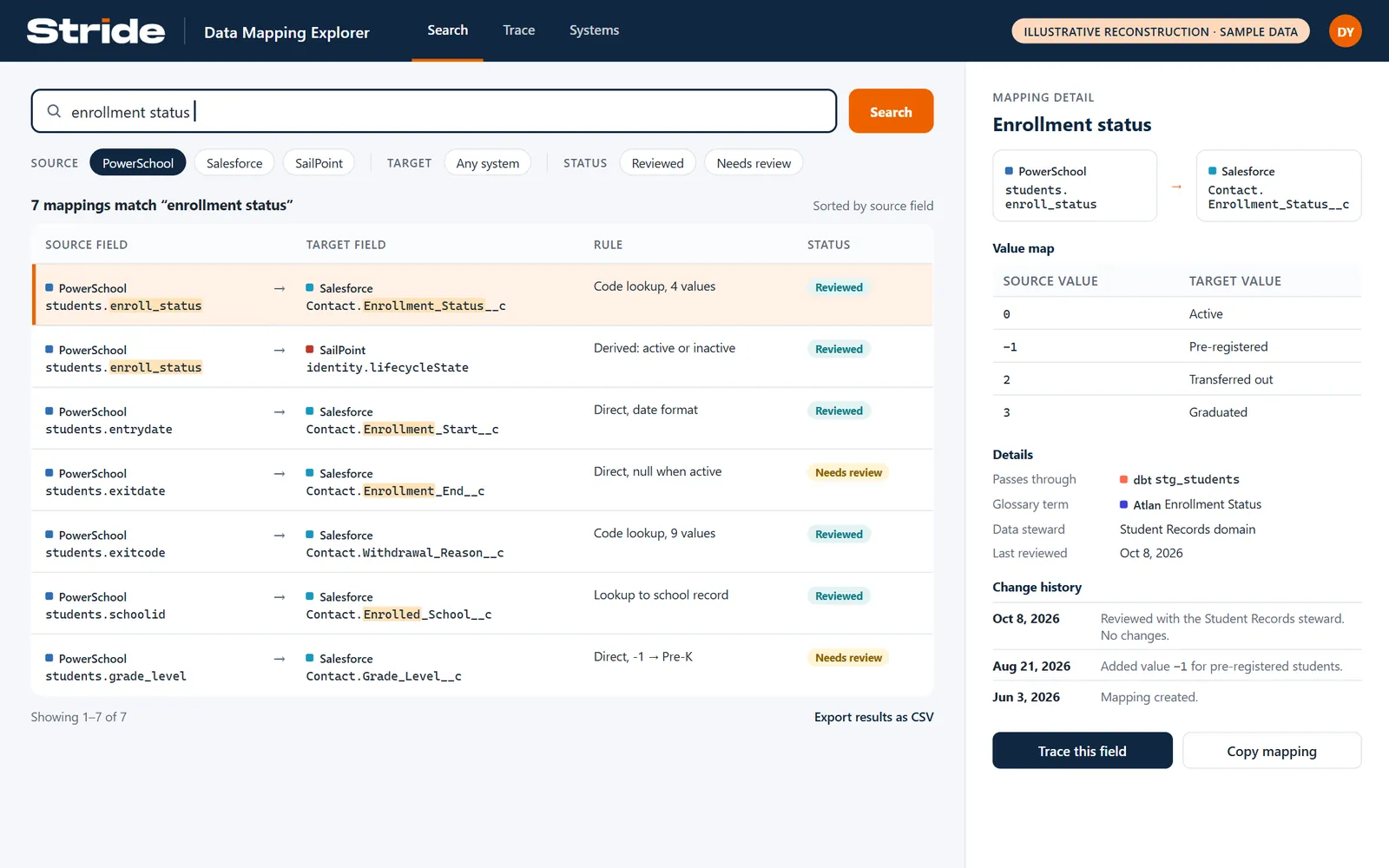
I map fields and data between PowerSchool, Salesforce, SailPoint, and other connected systems. The mappings are the source material the search and tracing tools are built on.
I regularly use Python to analyze data in dbt-related work.
Tools
Search and tracing tools for data modelers
A field mapping helps only when people can find the field in front of them. I built React tools that let data modelers and architects search the mappings and trace data from one system to the next.
I implemented single sign-on (SSO) and deployed the tools on AWS Amplify.
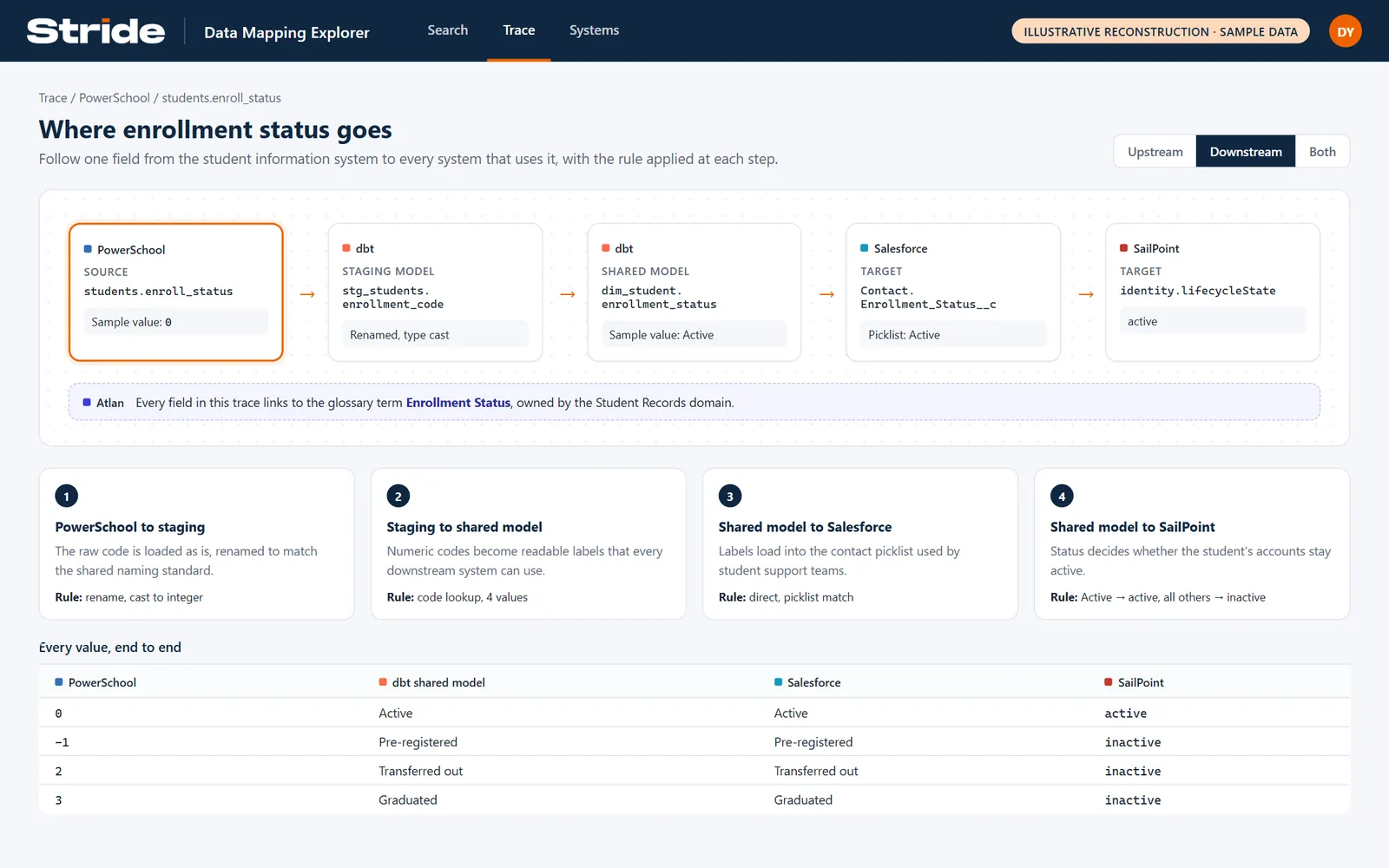
A trace answers a question data modelers ask before any change: if this field changes, what else changes with it? The trace view follows one field through each system and states the rule applied at every step.
Knowledge base
A knowledge base for data stewards and Atlan users
Atlan is a data catalog and governance platform. I built a custom React knowledge base, deployed on AWS Amplify, for Stride's data stewards and Atlan users.
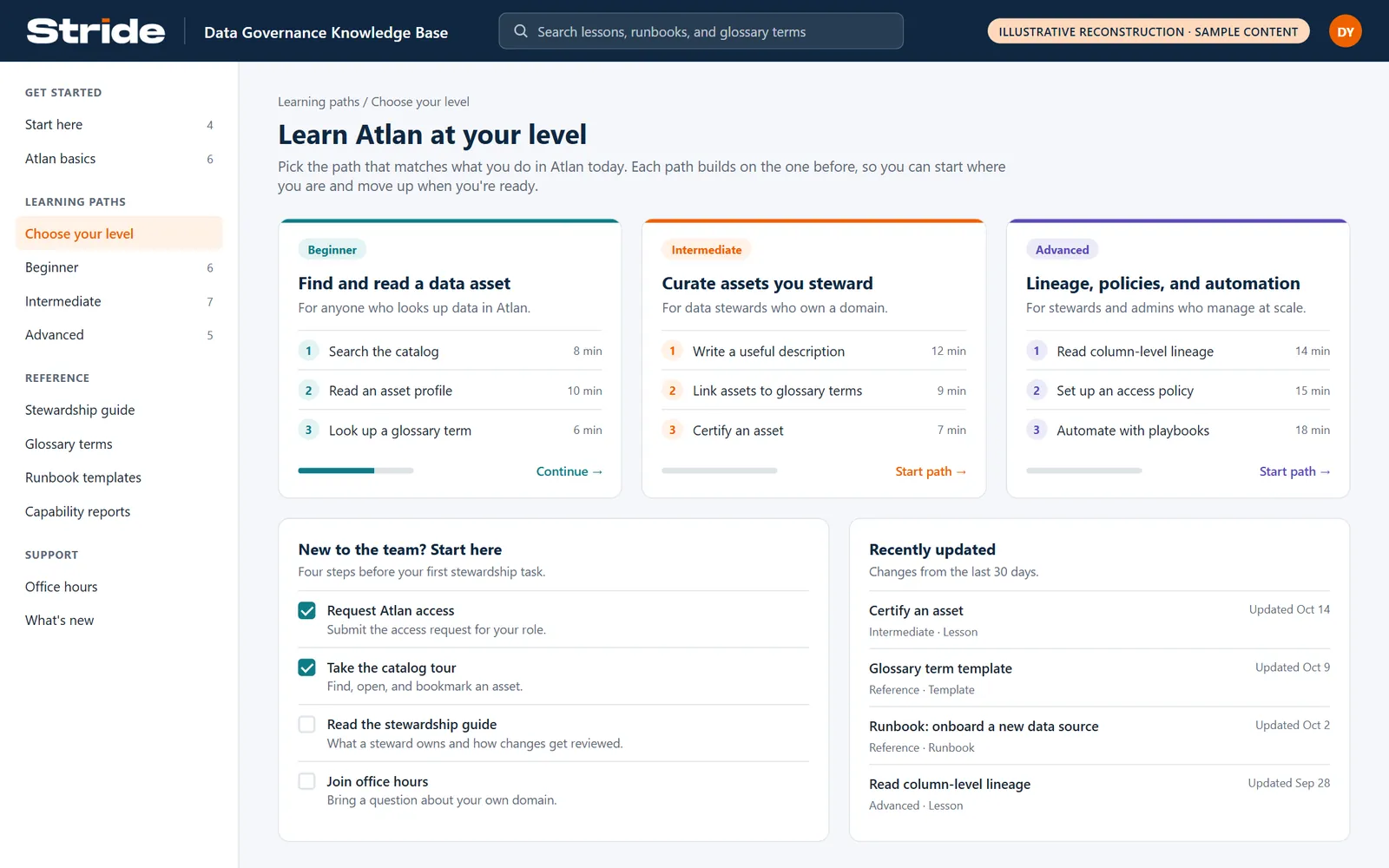
The knowledge base gathers training and onboarding materials and organizes them by level, from beginner through advanced use, so a new user and an experienced steward can each start in the right place.
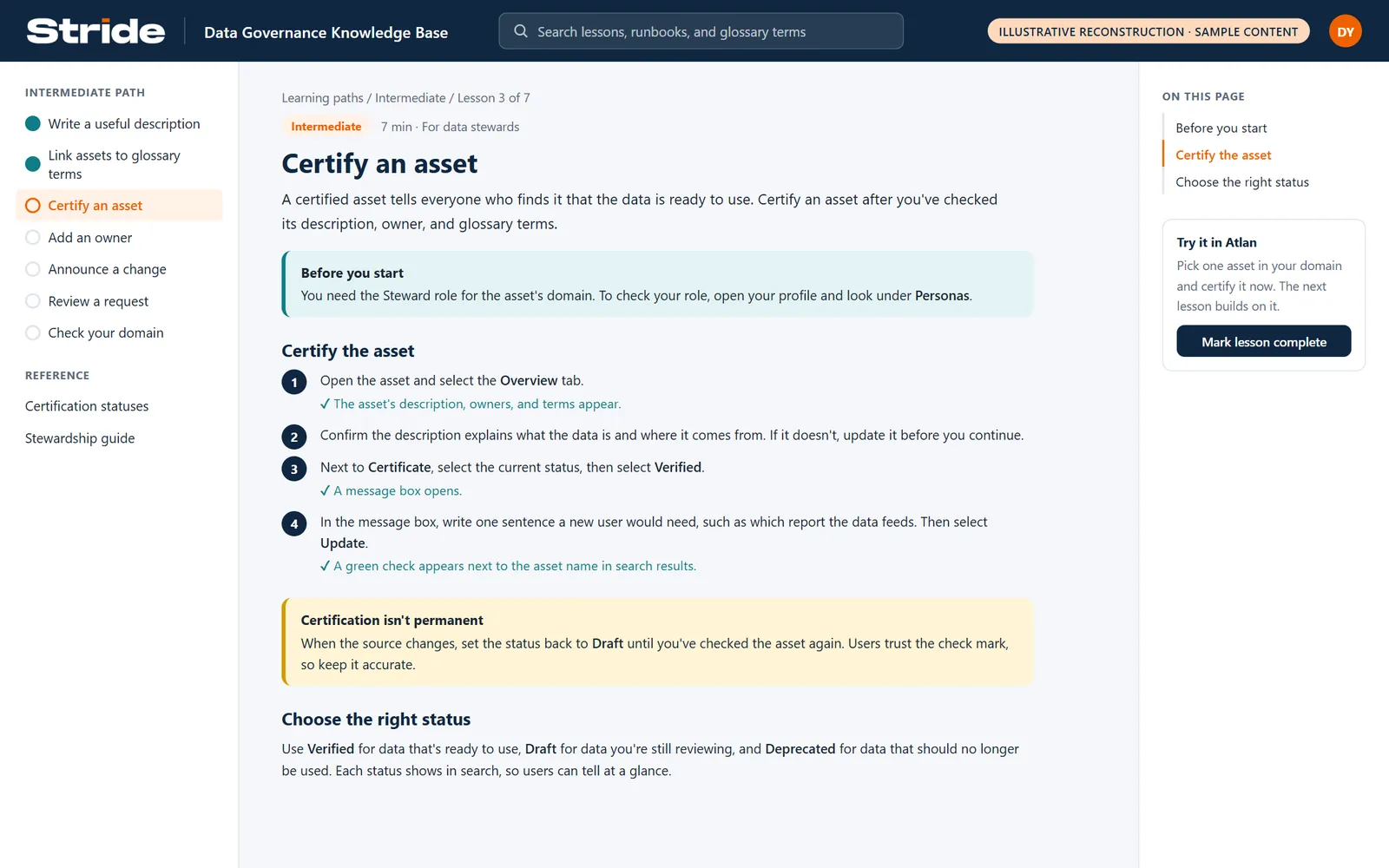
Each lesson follows the same pattern. The opening says what the user can do after the lesson, a callout lists the access they need, and every step that changes something ends with what the user should see. Warnings sit next to the step they apply to.
Governance
Runbook templates and interactive reports
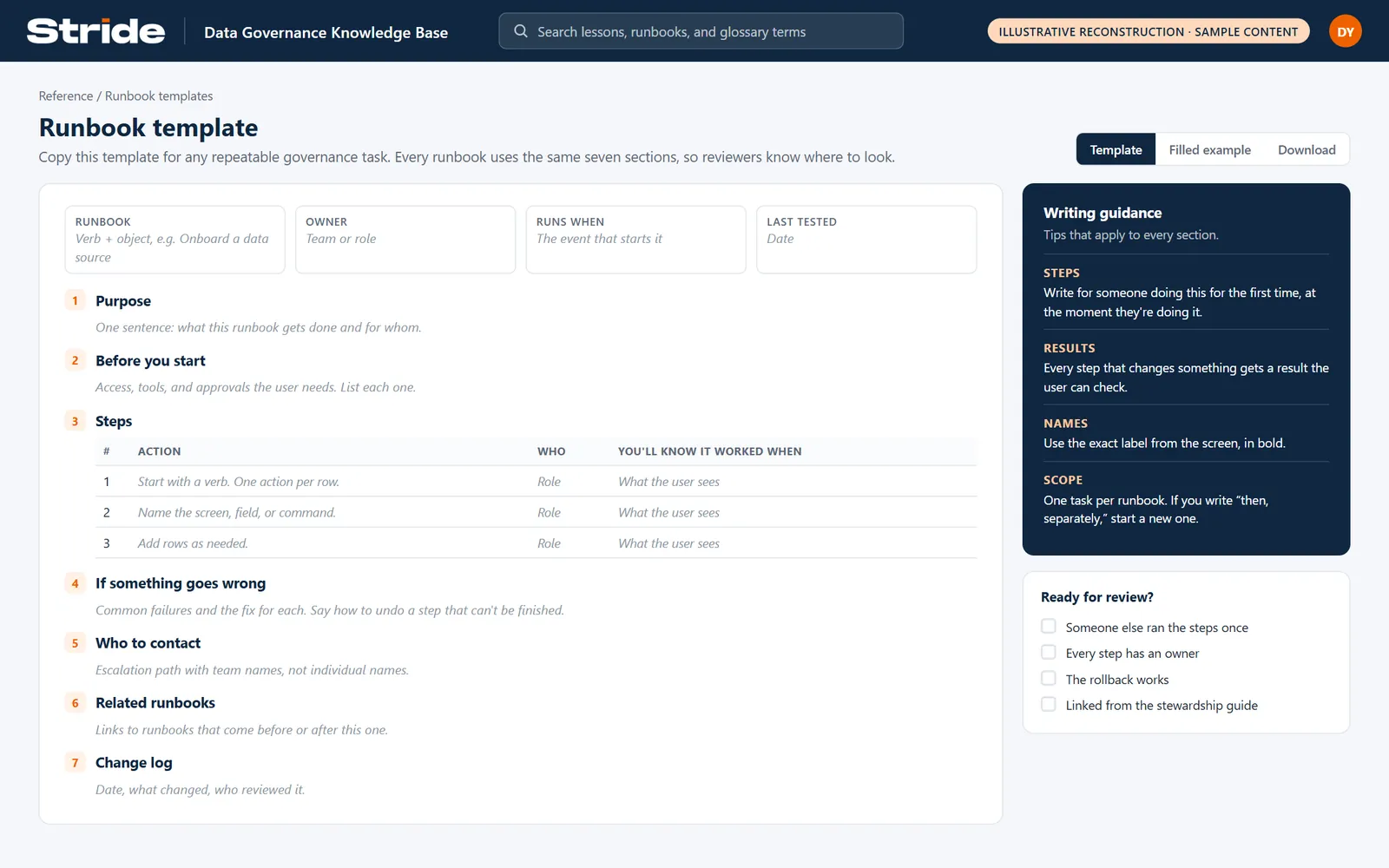
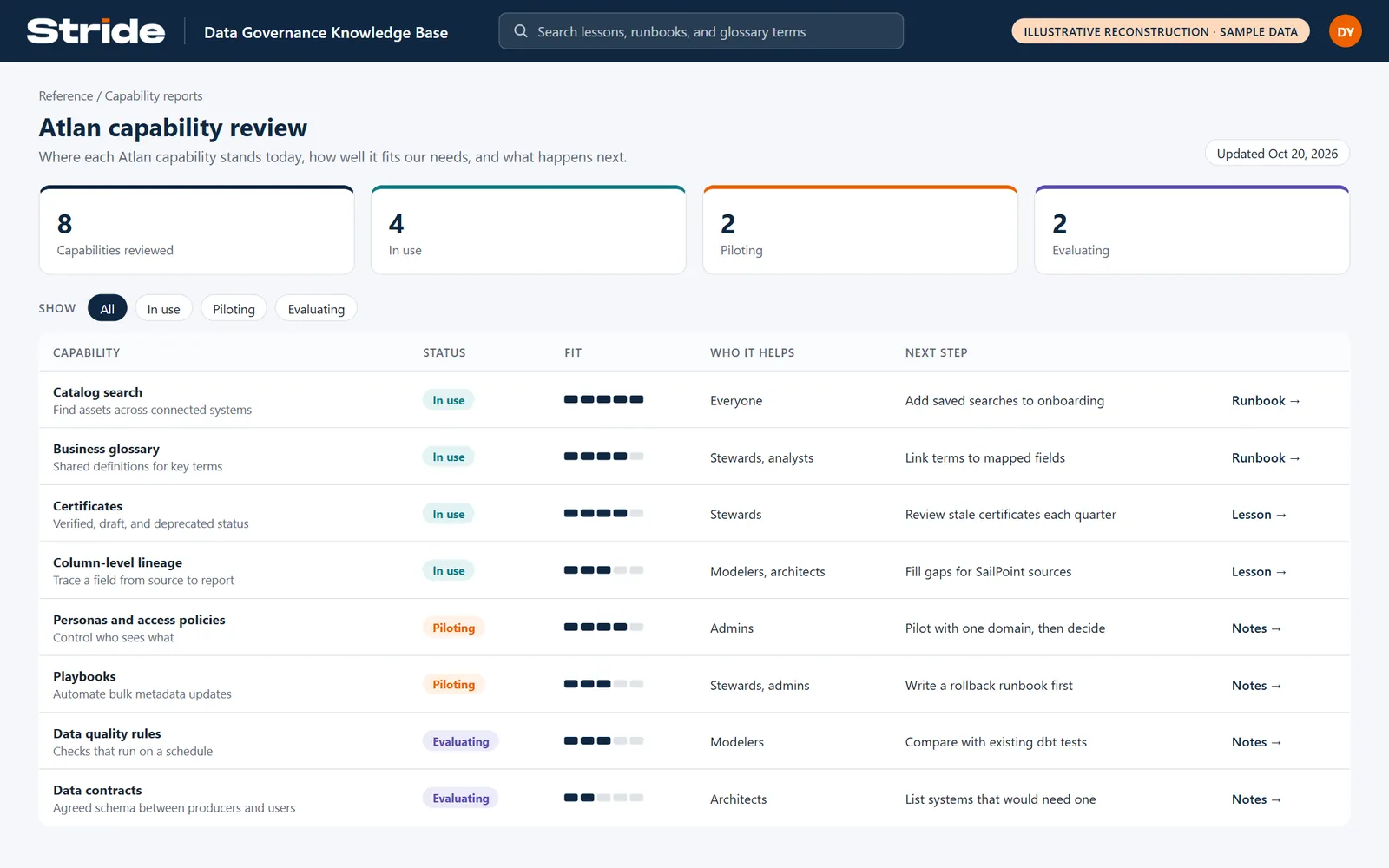
For Data Governance teams, I created runbook templates and interactive reports that help them evaluate current and potential Atlan capabilities.
A template gives every runbook the same structure, which helps the people who write runbooks and the people who review them. The template carries its own writing guidance and a review checklist, so a new author knows what a finished runbook looks like before they start.
The capability reports put each Atlan capability in one place with its status, how well it fits, who it helps, and the next step, so a governance team can decide what to adopt next.
Deliverables
What I delivered and who uses each piece
Each deliverable serves a different group of users. The table below pairs them.
| Deliverable | Built with | Users |
|---|---|---|
| Field and data mappings between PowerSchool, Salesforce, SailPoint, and other systems | Python, dbt-related analysis | Data modelers and architects |
| Search and tracing tools for the mappings | React, SSO, AWS Amplify | Data modelers and architects |
| Knowledge base with training and onboarding materials | React, AWS Amplify | Data stewards and Atlan users, beginner to advanced |
| Runbook templates and interactive reports | Templates and reports | Data Governance teams |
The screens on this page use sample data. The tools, knowledge base, and runbooks themselves are internal to Stride.